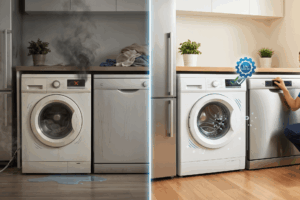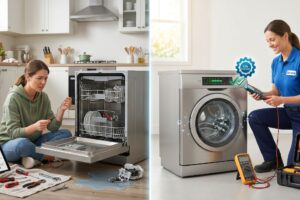


Regular home appliance maintenance is the key to extending the lifespan of your machines and ensuring they operate at peak efficiency. By performing simple, routine checks, you can prevent minor issues from escalating into costly repairs or unexpected breakdowns.

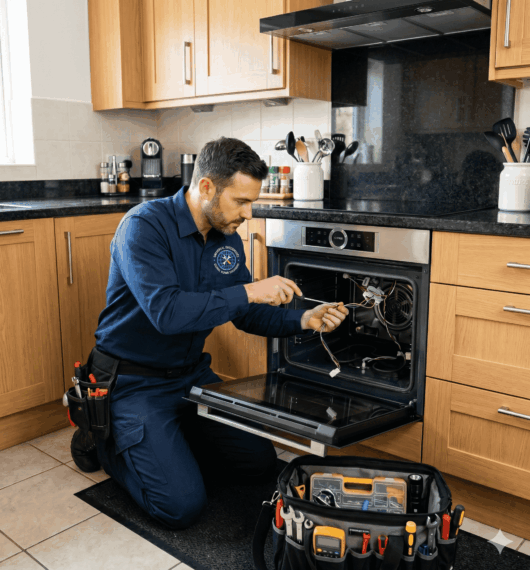
Home Appliance Maintenance
Your home appliances work hard every day. With a little preventive care, you can dramatically extend their lifespan, cut energy bills, and avoid expensive emergency repairs. This guide covers everything from refrigerators to dishwashers — practical, expert-backed advice you can start using today.
We hold ourselves to the highest standards of workmanship on every job. Our technicians are continuously trained, regularly updated on new technologies, and equipped with the best tools available — because your appliances deserve nothing less than the best repair.
Why Regular Appliance Maintenance Matter
The average household spends between $1,000 and $1,500 replacing appliances every year. Most of those costs are preventable. Routine maintenance doesn’t just extend the life of your appliances — it keeps them running at peak efficiency, which directly reduces your monthly energy bill.
According to appliance repair data, 65% of all service calls could have been avoided with basic preventive maintenance. A refrigerator with clogged coils can use up to 25% more electricity. A washing machine with a worn drum seal can cause water damage that far outweighs any repair cost.
Refrigerator Maintenance Tips
Your refrigerator is one of the only appliances that runs 24/7. Small maintenance habits keep it efficient for 15–20 years.
Clean the Condenser Coils
Coils at the back or bottom of your fridge collect dust and pet hair, forcing the compressor to work harder. Clean them every 6–12 months with a coil brush or vacuum attachment.
Inspect the Door Seals (Gaskets)
A worn gasket lets cold air escape. Test it: close the door on a piece of paper — if you can pull it out easily, the seal needs replacing. Clean gaskets monthly with warm soapy water to prevent cracking.
- Keep interior temperature between 35–38°F (1.7–3.3°C)
- Check door hinges annually for sagging or misalignment
- Defrost freezer when ice buildup exceeds ¼ inch
- Clean interior shelves and drip pan every 3 months
- Keep the fridge 2/3 full for optimal airflow
Washing Machine Care
Front-loaders and top-loaders have different maintenance needs, but the fundamentals are the same: keep it clean, balanced, and free of buildup.
Monthly Drum Cleaning
Run a hot empty cycle with a washing machine cleaner or 2 cups of white vinegar to dissolve detergent residue and prevent mold. Leave the door ajar between washes to allow airflow.
Check Hoses Annually
Inspect inlet hoses for cracks, bulging, or corrosion. Replace rubber hoses with stainless steel braided ones every 5 years — a burst hose is a leading cause of household flooding.
• Use HE (high-efficiency) detergent in HE machines — excess suds damage seals
• Never overload the drum — it strains the motor and bearings
• Wipe the door gasket after every wash on front-loaders
• Level the machine on its feet to prevent excess vibration
• Clean the lint filter (if accessible) monthly
Oven & Stove Maintenance
A clean oven is not just hygienic — it cooks more evenly, uses less energy, and lasts longer. Grease buildup is also a fire hazard.
Regular Cleaning
Wipe spills immediately after the oven cools. For deep cleaning, use the self-clean cycle sparingly (no more than once or twice a year) as the extreme heat can stress components. Baking soda and water paste is a gentler alternative for regular cleaning.
Gas Stove Burner Care
Remove burner caps and grates monthly and clean with hot soapy water. Ensure igniter ports are clear of debris — blocked ports cause uneven flames and ignition failure.
• Check the oven door seal for tears or gaps every 6 months
• Calibrate oven temperature annually with an oven thermometer
• Replace oven light bulbs with the correct wattage to avoid heat damage
• For electric stoves, inspect coil elements for pitting or burns
Dishwasher Upkeep
A well-maintained dishwasher uses less water than hand washing and can last 10–15 years. Most issues come from clogged filters and hard water buildup.
Clean the Filter Monthly
Most modern dishwashers have a removable cylindrical filter at the bottom. Remove it, rinse under running water, and scrub gently with a soft brush. A clogged filter is the #1 cause of poor wash performance.
Spray Arm Maintenance
Remove spray arms every 3 months and clear holes with a toothpick. Blocked holes create uneven water pressure and dirty dishes.
• Run a vinegar cycle monthly: place 1 cup of white vinegar on the top rack and run a hot cycle
• Inspect and clean the door gasket for food residue and mold
• Use a rinse aid to prevent spotting and protect the interior
• Ensure dishes don’t block the spray arms before running a cycle
Annual Appliance Maintenance Schedule
Use this quick-reference table to stay on top of routine tasks throughout the year.
Appliance | Task | Frequency |
Refrigerator | Clean condenser coils | Every 6–12 months |
Refrigerator | Check door gaskets | Monthly |
Refrigerator | Clean drip pan | Every 3 months |
Washing Machine | Drum cleaning cycle | Monthly |
Washing Machine | Inspect water hoses | Annually |
Oven | Wipe interior & seals | Monthly |
Oven | Deep clean / self-clean | 1–2× per year |
Oven | Calibrate temperature | Annually |
Dishwasher | Clean filter | Monthly |
Dishwasher | Check spray arms | Every 3 months |
Dishwasher | Descaling cycle | Every 3 months |
When to Call a Professional
Some repairs go beyond DIY — and attempting them without expertise can void warranties or create safety hazards. Contact a certified Universal technician if you notice any of the following:
• Electrical burning smell, sparks, or tripped breakers from any appliance
• Water leaks that continue after basic gasket/seal inspection
• Loud banging, grinding, or squealing noises during normal operation
• Appliance failing to reach or maintain correct operating temperatures
• Appliance that won’t start despite power being confirmed